Saturday, April 9, 2016

Nae man can tether time nor tide (Thunderball)

fig. 1: Signs this movie was remade in 1983.
I'm about twenty weeks into a film retrospective I began largely because the film Spectre annoyed me so much. I did these movies in reverse order because I wanted to get to talk about the Daniel Craig films first, as they were the obvious antecedents to that film, and then the Pierce Brosnan ones, as the latter films were the first Bonds I saw in the theater. Also, Sean Connery has never quite been my favorite James Bond. He has his moments of fitful charm, but I was happy to wait him out.

One consequence of this, however, is by the time that I get to Thunderball, a film that seems on autopilot with regard to so many of the Bond canon's tics, I find I have very little actually to say about it. Particularly down to the fact that this film was remade almost twenty years later as Never Say Never Again, a much more interesting picture in terms of what it had to say about the character by telling almost the exact same story, but aging him ahead.

There were rumors/threats in the 1990's of another Thunderball remake, to be titled Warhead or Warhead 2000 AD. They obviously never came to pass and while it's easy to imagine the mathematics of diminishing returns on these, it would be worth it to see a geriatric Connery go through the undersea motions again, just to find out what we could learn from the juxtaposition between the constraints of the script and the onward press of history.

Most of the set design in this film is unremarkable. Bond spends his time mainly at a health clinic, or in and out of a hotel in the Bahamas. Even Supervillain Emilio Largo (love the name) operates out of a house that would be at home in any American suburb, give or take the pool full of man-eating sharks. Two other locations in this film, however, are much more interesting.

The first is SPECTRE HQ. The top-secret criminal syndicate operates out of a secret room in a humdrum office building in Paris. Turn down the right corridor, push the right button, as happens so often in these movies, and you're transported to a modern, stainless-steel conference hall where the top criminals of the world report to their shadowy, shuttered leader.

fig. 2: Whose job is it to polish these fixtures? Number 2000?

By contrast, take a look at the fabulously baroque, old-world hall the Double-0 agents meet in conference with M and some British and NATO bigwigs.

fig. 3: The Halls of Power
This is the only time we see--nominally, at least--what appear to be all nine of the Double-0 agents. Bond arrives late and sits seventh from left. The whole thing is just brimming with opulence, and could be confused easily for some fancy ballroom (and surely was one at one point) were it not for the tapestry that retracts and gives them a view of the world.

Contrast Thunderball's slickly ultramodern SPECTRE with the skulking-in-the-shadows version of it in 2015. And compare Spectre's Spectre, too, to what we see of MI:6 in Thunderball. Put a balcony halfway up those long walls and turn out all the lights, the rooms would be strikingly similar. They both represent institutionalized, aging power. In Thunderball, SPECTRE is a kind of nightmarish modern vision of progress, a criminal conglomerate, a monopoly on evil price-fixing heroin and consulting on the British Train Robbery.

This is notably similar to QUANTUM, the ersatz SPECTRE from 2008's Quantum of Solace, who conduct their business meetings through bluetooth ear pieces while watching modernist updates of opera. When Spectre itself came back (un-acronymed, the acronym being a very 1965 way of showing something as forward-thinking), perhaps to set itself apart, and perhaps because Sam Mendes just loves loves him some dramatic shadows, the HQ of this world crime league, now moved to Rome, located to a palace of shadowy affluence.

fig. 4: Updated
In the fifty years between these pictures SPECTRE lost the capital letters and changed from a modern sort of evil to a somber, eldritch thing, the rot at the core of the world. In the meantime, James Bond's digs became more and more modern, starting around the time of GoldenEye's big wall-screens and reaching its apex in the dueling modernities of Quantum of Solace, pitting those bluetooth head sets agasint M and Tanner's touch-screen Wall of Exposition.

Since 2008, the organization has regressed. Spectre saw M actively reject the clear-glass modernism of Andrew Scott's MI:5 for the old World War Two tunnel aesthetic from Skyfall. In terms of architecture, then, it's only the obvious money on display in Spectre's digs that separates them from those of the film's MI:6. They have come, in the end, to the same place, signifiers of old empires, their conflict now represented as the blood feud between two brothers. What older story is there?

Couldn't resist, even if God is displeased with sacrifices of low-hanging fruit.

Saturday, April 2, 2016

You Will Become My Perpetual Opponent (You Only Live Twice)


fig. 1: Mickey Rooney


Ugh.

Where to begin?

Some trivia: The screenplay for this film was written by Roald Dahl, as a kind of a swap with Fleming, where Fleming wrote the screenplay adapting Dahl's Chitty Chitty Bang Bang. Either as a result of this or because the producers couldn't quite swing their original plan of adapting On Her Majesty's Secret Service just yet, much of the plot of the novel went out the window. It marks the first full-on glimpse of Ernst Stavro Blofeld, played here by Donald Pleasance in a performance that would be readily parodied in decades to come. Pleasance plays Blofeld as a slimy little creep, and we finally get our first look at him just as James Bond does.

It's a build-up audiences were waiting for since the second James Bond film, From Russia With Love, which first introduced the character, and SPECTRE. This was, however, Pleasance's only turn in the role. Blofeld would be played two years later by Telly Savalas--who, despite his baldness, bears zero resemblance in his portrayal to Pleasance--and two years after that by Charles Gray, who again switches up the character traits, making him cheerily, urbanely evil.

fig.2 John Wayne
One element went largely unchanged from the novel of You Only Live Twice to the book: In order to get close to Blofeld's hideout, James Bond must disguise himself as a Japanese fisherman, meaning Connery spends about a half hour or so of this film in yellowface. There is, in fact, an unsettling, long tradition of yellowface in Hollywood, outlasting blackface by decades. There are all sorts of reasons for this, and I'm not political-science literate enough to go in to all of them. Suffice it to say that instead of just refusing to tell stories about East Asian people (as they largely did for Black people) Hollywood just subbed in White actors to play East Asian characters.

fig. 3: Warner Oland

The tradition of yellowface goes back at least as far as the beginnings of cinema, because racism. The most prominent early examples are the Charlie Chan series of films starring Warner Oland, a Swedish actor in heavy makeup who played the titular detective in sixteen movies throughout the 1930's. Chan would go on to be played by White actors Sidney Toler (twenty-one films!) , Roland Winters (six films), and J. Carrol Naish (TV series: forty episodes), not getting an actual Asian actor until the Seventies when Keye Luke played him. Oh, but fret not. He'd be played later by other White actors, including one of my favorite performers, Peter Ustinov.

fig. 4: Luise Rainer
Worse offenders (we have to grade on kind of a curve here) are films like The Good Earth, an adaptation of Pearl S. Buck's runaway best-selling novel, also made in the Thirties. As far as that film goes, all the leads are played by White actors, anyone with whom the audience is meant to sympathize is White, and the background extras, well, you can guess about them. Producers of the film lobbied Actual Chinese American actress Anna May Wong for the role of the film's villain. Wong politely told them to go to Hell.

Wong is a tremendous example of the damaging effects of this kind of Hollywood-mandated racism. A mesmerizing performer, she wasn't even considered for the lead. A third-generation American, Wong was pigeonholed into Butterfly and Dragon-Lady roles throughout her career, encountering hostility in her ancestral country and typecasting in America.


fig. 5: Sean Connery

In the novel, Bond is made up to look Japanese in order to pose as a coal miner and get closer to Blofeld's organization. This works right up until his confrontation with the evil mastermind and the ensuing fight, which leaves Bond with amnesia, believing himself to be a Japanese fisherman until he reads his own obituary. In the film, the ruse is simply to get him geographically closer to the secret volcano lair of SPECTRE. It never comes up, and by the time Bond swims over to Blofeld's volcano fortress, the whole business has washed off just in time for the climactic fight.

You could argue SPECTRE's goons are active in the surrounding fishing villages, and that Bond--who makes about as convincing a Japanese as your average 6'2'' Scotsman--needed to blend in, but this whole business could have been excised completely from the film without much hand-waving.

fig. 6: Christopher Lee

It's a shame, because there are things to like about this movie. Much like the later Roger Moore films, the sets in You Only Live Twice are just frigging dynamite. The volcano lair gets much attention (And it should: that monorail, yo.) but Tiger Tanaka's office is also great, the sets at the Osata corporation are fantastic in this mod Sixties fashion, and the cavernous workings of US Central Command, where the Men in Charge watch events transpire at a tremendous remove are well worth looking at also. Tanaka himself is an enjoyable presence, even dubbed. This is a stylish film, and set designer Ken Adam deserves a lot of credit.

Unfortunately it has aged just astonishingly poorly.

fig. 7: Scarlett Johansson (Honorable Mention)

Bosh Bosh Bosh Loads of Money (Casino Royale [1967])

"Fire my agent."
There are times it is painful to be a completist.

If 1967's Casino Royale is half as clever as it thinks it is, it will go down as one of the great comic masterpieces of all time. That most people don't even know it exists tells you how that turned out for everyone.

Backing up: It's 1967. Five years since Dr. No and arguably the height of the spy-fi genre. The airwaves and silver screens are flooded with parodies, pastiches, and cash-ins. Now, way back in 1954, Ian Fleming sold the rights to his first novel, Casino Royale, for a six hundred dollars. The book was adapted into an episode of the American anthology TV series Climax! and would bounce about during the Sixties before producer Charles Feldman bought them, intending at first to produce a straight James Bond film. He even went so far as to approach Sean Connery, and when he couldn't get him, twisted the plot of Casino Royale around toward a parody. The film rights to Fleming's novel would languish for decades after before eventually going to Sony, which has the current lease on the character, in 1999, for ten million dollars.

As spoofs and homages go, Casino Royale is the only one with pedigree. It's the only spy spoof that can have a character named James Bond (played by David Niven, Ian Fleming's original choice for the character) offer commentary of the genre popularized by films starring a character named James Bond. Thing is, this meta-commentary is disingenuous. Niven's Bond bemoans the fact that "secret agent has become synonymous with 'sex maniac,'" but that's what those books were. The original film adaptations of Fleming's novels were fairly faithful to the source material (except You Only Live Twice, also released in '67). Niven's Bond is a refined, eccentric British gentleman, who declares spying an alternative to outright war, but for whom it feels more like a diversion, an outlet for his eccentricities, a hobby. Niven never gives the sense, in this movie or any other I've seen him in, as particularly exerting himself at anything.

Perhaps Niven's Bond is speaking more to the rest of the genre that sprang up over his filmic alter-ego. [[put list here, instead]] In an effort to out-Bond Bond, these parodies and pastiches upped the camp factor, upped the gadget factor, and way upped the girl factor.

Bernard Lee, Lois Maxwell, and Neil Connery
Incidentally, 1967 was also the year of Operation: Kid Brother, a James Bond pastiche that starred Neil Connery, of all people, Sean Connery's dentist brother. I saw Kid Brother (aka Operation Double 007, aka OK Connery) ages ago on Mystery Science Theater 3000 rerun. I didn't have the strength to watch it again, but it's free on Amazon Prime if you ever wanted to watch a Professional Dentist act. Operation: Kid Brother is notable in that it stars Bernard Lee (who played M from Dr. No through Moonraker, and Lois Maxwell, who played Miss Moneypenny until the end of Roger Moore's tenure in the role. They basically reprise their roles from the series with the serial numbers filed off, a fact which very much irritated Sean Connery, who felt the film made his brother a joke. Other Bond alumni include Adolfo Celi (Thunderball) and Daniela Bianchi (From Russia with Love). Kid Brother belongs to the genre of the Eurospy film. Eurospy films were cranked out at a fast clip in the mid-Sixties, pastiches or parodies of James Bond that capitalized on the trend in the way spaghetti westerns, made on the cheap in Italy, were meant to capitalize on that genre.

There are some funny bits in Casino Royale, but only if you, like me, are partial to Dad Jokes. Casino Royale is a very Dads' Interest film, employing not only lame puns, but also an entire regiment of lissome lady thespians to lob juvenile sexual innuendo that in 1967 was probably pretty racy. It bears a strong resemblance to the Carry On! series of films in that regard, the kind of ham-fisted attention grabbing that throws pretty girls and eye-roller jokes at the wall to distract you from the fact that nothing is really happening. Sometimes this works. Just as often it does not.

Some memorably off-kilter set design as well.
Not helping matters is that the production of this film was, by all accounts, a complete disaster. Orson Welles and Peter Sellers couldn't stand each other, and both arrived on set laboring under the delusion that they were involved in a serious picture. Shooting went long and the final cost of the film was almost twice the six million dollars originally budgeted. It arrived to middling reviews

An interesting note: this film is the first instance of what would become a popular (but easily discredited) fan theory surrounding the character of James Bond: that the name is a code name. That Timothy Dalton and Pierce Brosnan and Roger Moore all had different names, that the name "Bond" is as much a designation as "007." In Casino Royale, the original Sir James Bond recruits his old flame Vesper Lynd, some dude who was famous in 1967, a professional baccarat player, and his own daughter (by Mata Hari!) to work under the name "James Bond 007," a largely nonsensical gag that Niven's character seems to grow increasingly tired of, despite having invented it.

Mata Bond. Looking pretty good for fifty.


About fifteen minutes of this two-hour picture is devoted to the classic elements of Fleming's novel. A man, named James Bond, facing off against a man, named Le Chiffre in a game of baccarat in order to bankrupt Le Chiffre. Everything else that swirls about it, including an interminable sequence in Scotland at the beginning of the film and a chaotic battle played for wacky laffs at the film's end, is a nonsensical parade of half-baked ideas, limp jokes, and visual gags that sometimes work.


Also, there is a flying saucer.

Thursday, March 31, 2016

io9 Concept Art Writing Prompt: March 31, 2016


When the cars rose up, the city changed. Little bodegas sprung up at the top of skyscrapers, high-rise drive-through restaurants appeared, along with a spiderweb of nets to keep the debris from errant collision from raining down on the increasingly thinner street traffic.

Ground level businesses withered and died on the vine. The streets became empty, shady, and desolate.

There was a romance to the street level, to that grandeur buildings took viewed from the ground, something taken for granted as the city moved upward, with its cobweb full of busted-up cars.

Marquand was alone on the street. All around him was an echoing quiet. He had a few hours before his shift. Time enough to continue coloring the vacant streets in chalk, in elaborate, intricate, haphazard designs made to be seen and appreciated from an air that had long forgotten about them.

Saturday, March 26, 2016

You Dreamed You Could Hold Back Death (On Her Majesty's Secret Service)

fig. 1: Not Bond Villains
That George Lazenby is considered the weakest James Bond is something of a back formation. After all, he only did one. That must make him the weakest link, yeah? In truth, however, the leaving was Lazenby's decision. After the runaway success of Easy Rider, released the same year, Lazenby thought there wasn't a future for a suit-and-tie Government Agent, every inch the Reactionary Right Hand of the Man. While it's easy to point out the shortsightedness of this, something I suspect Lazenby himself has done many times in the last forty-seven years, in a way he was right. The "Spy-fi" genre that Dr. No birthed into life in 1962, and which spawned dozens of imitators, homages, and spoofs, was on the way out. There would be plenty of movies in the coming decades to play with international intrigue, though only Bond would outlive his descendants.

Watching On Her Majesty's Secret Service, I wondered a bit at what the George Lazenby Era of the franchise might have looked like, had he stayed on for the bulk of his contract. Though he has his charms, Lazenby doesn't have the ironic distance of Moore, or the subtle menace of Connery. He's earnest, more than anything, a quality that seems ill-suited for an international spy. This is, famously, the only film in which James Bond (nearly) cries. And, sure, it's after the brutal murder of his wife, but it's hard to imagine Daniel Craig or Timothy Dalton, the two other actors in the franchise who have been written in a more humanistic way, reacting with anything other than smoldering rage at the whole business. Craig gets off a clipped "the bitch is dead" at the demise of Vesper Lynd, a line that's verbatim from the Casino Royale novel, and saved only by Craig's repressed-tough-guy delivery, and some exposition by Judy Dench.

Speaking of Craig, OHMSS is the movie where James Bond falls in love, and, as such, it's a first in an every-other-Bond series of attempts to position the character as a more straightforward romantic lead, and to humanize him. You can infer that Bond falls in love with whomever he ends up stranded on some raft with by the end of a given picture, but with a few exceptions, that's not really text on screen. He's generally understood to be in it for less straightforwardly-romantic reasons. As a movie where Bond meets the great love of his life, this film draws quite a few obvious parallels to 2006's Casino Royale, as well as Spectre, in the latter's wintry Alpine setting and female lead, Lea Seydoux's Madeline Swann, with whom it's inferred Craig's Bond walks off into the sunset. Although, if this is the film that positions James Bond as a romantic lead, it of course goes about it in a very James Bond sort of way, which is to say he still has time (and inclination) in the middle act of this film to fuck his way through a harem of would-be assassins brainwashed by his nemesis to be delivery systems for his crop-destroying mega-virus.

Like you do.

Tracy Bond (nee Countess Teresa di Vicenzo) casts a long shadow over the franchise. Or, at least, her death does. Of all the Bond Girls with the exception of Vesper, she's the most complicated. She's suicidal, suffering from depression, a divorcee who lost a child, prickly, and a daredevil behind the wheel. In the film as well as the novel, she challenges Bond, remains an enigma to him. It's a pity, then, that she's reduced to "the one that died." Perhaps as an inevitable consequence of the film's emotional investment in her when it still has an eye on the next sequel, Tracy's number was always going to be up, though I would have vastly preferred that her legacy to the franchise be for slightly more nuanced female characters, going forward.

fig. 2: Lady Olenna in her hey day.
Of course, Tracy died in the original novel as well, the second in a three-part trilogy that began with Thunderball and ended with You Only Live Twice. The franchise was meant to follow the book order, but couldn't secure its Swiss locations in time for production, so OHMSS was pushed back and YOLT forward. This both robs the latter film of much of its urgency (which wasn't so much a problem, they mainly threw the plot out the window) and brings up the question of why Blofeld can't recognize Bond by face when he at least already knows who he is by name. Bond shows up at Blofeld's Alpine HQ under the guise of a British Heraldry expert, here to authenticate the latter man's claim to be a Count.

Blofeld's status as a Count hangs on his (lack of) earlobes, a congenital defect apparently shared by members of the Bleauchamp family, the sort of crumbling European dynasty where these sorts of things tend to crop up. Bond states that Blofeld had his ears fixed, making his the first physical quirk actively sought out by a character in a franchise full of an obsession with deformity and physical weirdness. He's played here by Telly Savalas, continuing a tradition of one-and-done Blofelds. Savalas not only switches faces from the previous installment's Donald Pleasance, but nationalities as well, making no attempt at hiding his American accent. This makes him, by default, the first American supervillain in the series, and another American overly invested in a purported connection to European royalty.

fig. 3: It happens.

This royalty idea is how he defines himself. He even makes it one of the conditions of his latest ransom of the world, that he be recognized as the person he says he is. It's easy to draw a parallel between his character here and the one we get in Spectre. As part of that film's shoehorned retcon, its reborn Ernst Stavro Blofeld was, once upon a time, lil' Franz Oberhauser, winter sports enthusiast and sorta-brother to James Bond. It's a silly misdirect, in the vein of the latest Star Trek film trying to lampshade that series' most iconic villain behind a name change, but it has the effect of making the identity that Spectre's Blofeld carves for himself similar to the one in OHMSS: built out of the scraps of another history. Chosen, rather than given.


What happens at the edges, then, of On Her Majesty's Secret Service, is a duel of identities. Blofeld's pretension to nobility. Bond's "bachelor's taste for freedom" undermined for the first time. Even the recasting of the character lends the movie the feel of answering the question of who James Bond is. For the first time, the answer isn't Sean Connery.

Friday, March 18, 2016

Beat It Into Submission With My Charm (Diamonds Are Forever)

fig. 1: It's a little-known fact that this film was actually Guy Hamilton's oblique confession that he faked the moon landing.
Diamonds Are Forever marks the midpoint in Sean Connery's long goodbye from the James Bond character, having left the series after 1967's You Only Live Twice due to a contract dispute. He would return twelve years after this film in a little movie I already covered, Never Say Never Again.

There are odd things I remember about each of these movies. Little images that stayed with me, divorced from context., until I rediscovered them in this long retrospective. For Diamonds, they are the scene where Bond pretends to be a couple by using his own hands to make it look as though he's kissing someone, and the scene where Jill St. John's Tiffany Case has one of Blofeld's secret data tapes tucked in her bikini bottom. It's an odd thing to remember. I kept waiting through Never Say Never Again for the same thing to happen to Kim Basinger, but I had the wrong Connery-is-too-old-for-this-shit picture. It's fitting, then, that I might remember this film only in snippets, as a half-remembered dream, because it is one of the most dreamlike, involving funeral home-running gangsters, a clear stand-in for Howard Hughes played by Jimmy Dean, and a face-changing, doppelganging return of that old saw Ernst Stavro Blofeld.

Blofeld. Along with Connery, this more or less marks his exit. He'll "appear" again, though not in name, in For Your Eyes Only, and later at the climax of the long reboot that has been the Daniel Craig era. Charles Gray is the latest actor to step through the revolving door of casting for this part, and he does pretty well in his cigarette-holder and Nehru jacket. His latest plan to ransom the world involves an orbital satellite geared up without a million diamonds set up to use lasers to attack the world's cities and nuclear stockpiles.

fig. 2: "Nobody tell Ronald Reagan about this!"

You have to wonder about the henchmen in these films. Diamonds Are Forever introduces two of the series more memorable contract killers, Misters Wint and Kidd, who appear to be in competition for the most baroque ways possible to murder a person. Wint and Kidd are out to kill off everyone connected in the diamond smuggling operation that Blofeld is running to build the reflectors for his diamond lasers. They kill one fella by scorpion bite, someone else by blowing up their helicopter, they drown a poor old lady, and, they make three increasingly byzantine attempts at murdering James Bond.

Their first attempt on Bond's life involves throwing his unconscious body (he gets knocked out a lot in this movie) into a coffin to be cremated, which is interesting in its funerary imagery. Bond shows up at a Nevada funeral home that is part of Blofeld's diamond smuggling outfit, posing as one of the smugglers. He's dressed for a funeral, of course, and gets tossed into that coffin. What's interesting about it to me is it's a direct call back to You Only Live Twice, a movie which opens on Bond's apparent murder and whose plot is largely predicated on his faking his own death. So both of Connery's official departure-pictures are practically elegiac around the edges.

Not that it was necessarily clear here or in '67 that this would be Connery's final picture. They brought him back When he signed on in 1962, he was a relative unknown, cast for his physical presence rather than his recognizability or his acting chops. He continued to be paid more or less as a bit actor being given a break by the producers, as opposed to the headliner of a massively successful movie franchise. When EON refused to pay Connery for what he thought he was worth, he bailed, coming back to this movie for the then-unheard of sum of a million dollars. He later donated the money to a Scottish charity and tried to change his image by starring in Zardoz. He declined a prospective five million dollar paycheck to star in Live and Let Die, and that was that.

Initially, the producers wanted George Lazenby, whom they'd signed to a multi-picture deal, back. Lazenby, who got the memo about the 60's counter-culture a bit too late, was convinced that James Bond as a film franchise and as an idea worth rooting for--this dinner-jacketed Agent of the Man--was on the way out. He was, to say the least, a bit off the mark. Though it seems unthinkable today, the producers were seriously considering an American as his replacement. Somewhere there is a parallel universe where Adam West, who was one of those Americans considered in the early 70's, played James Bond instead of Roger Moore. I would very much like to visit that universe. West turned the part down because he thought the role should be played by a Brit (I happen to agree, but come on, Adam. Get it together), but the producers soldiered on with the idea, eventually settling on American actor John Gavin, going so far as to sign him for the movie. He was, in preproduction, at least, James Bond. That was, until at the last minute, Sean Connery returned.

fig. 3: If nothing else, starring as Bond would have reunited West with Jill St. John

Connery is fairly bored here--though less than his first last picture, You Only Live Twice--which is a shame because I'd forgotten how charming the man can be when he puts his mind to it. Not in his dealings with the fairer sex, of course. One of Diamonds' more memorable bits has Bond relieving a young lady of her bikini top, then half-strangling her with it. Bond's charm--when it comes--comes in his dealings with his antagonists, the occasional bon mot delivered with impeccable unflappability. He is, in the end, one of them. Though his killings rarely have the rococo flair of Wint and Kidd, the fact that he's traditionally remembered as offering some lame pun after each one shows there's less daylight between he and they than the viewer might like to think. That was always Connery's strength. It perhaps gets forgotten in today's endless parade of tortured antiheroes, willing to do/sacrifice whatever it takes to achieve their own morally dubious ends, but James Bond was a figure of subtle menace, even as he worked for the good guys. It's almost refreshing, in a way. No real thinking is given to his interiority as a character. He is, as someone will remark much later on, a blunt instrument.

Back to Wint and Kidd. In one of their "attempts" to kill Bond, they stick him--unconscious again--into an oil pipe ready to be filled. I say "attempts," with quotes. This method is bizarrely involved, something that would be handily parodied in decades to come. TV Tropes has a page for it, "Bond Villain Stupidity," a subheading of "Why Don't You Just Shoot Him?" Wint and Kidd also, in the film's denouement, attempt to kill Bond and his love interest with a bomb in a cake--while they stick around and play at being room service! It's bizarre. By that final scene these two guys are unemployed, too, Blofeld having been killed and his operation shut down. So why bother? That's a heckuva brand loyalty to your sneering supervillain. Maybe they're bored with simply shooting people. Maybe this is the way they get their kicks.

As chained to the past as this film is, Diamonds Are Forever is interesting in what it portends about the future. The film's diamond/sunlight satellite scheme would be reused wholesale thirty years later for Die Another Day, and the general premise, of a James Bond out for revenge (though this film does not explicitly meantion Tracy Bond) would be used for Licence to Kill and Quantum of Solace, and might well be the model for the next Bond movie, now that Blofeld is back. Someone (Vesper Lynd, Teresa di Vicenzo, poor old Plenty O'Toole in this movie) ought to lean in and tell Madeline Swann that things don't always work out so hot for James Bond's girlfriends.

Friday, March 11, 2016

Symbolic Logic (Live and Let Die)


Live and Let Die is remembered for a number of things. It's the debut of Roger Moore in the role, and the best opening song of the franchise until Adele hits one out of the park. It's remembered as the only Bond film with the presence of straight-up magic, chiefly in the personage of Bond Girl Solitaire, a tarot-card reading fortune teller employed by the film's villain Mister Big. It's also remembered as the one with more black speaking roles in a Bond film before or since, and as the one where that means James Bond has to fight Harlem.

Well. He doesn't really. But let's start there.

Shortly after 007's arrival in New York, he takes a cab ride down through Harlem to follow a lead on a deceased British agent. His cab passes half a dozen people with speaking roles, and they're all reporting back to the mysterious Mr. Big. Even the cabbie is in on it. One of the things I noticed when I rewatched For Your Eyes Only was how paranoid the early goings of that film are. There's a sense in it that everyone--and everything--could spout murderous intent at any moment. Live and Let Die follows a similar approach but with an unsettling racial component. The Harlem of 1973 is as exotic territory for James Bond as the Soviet Union or Japan. It's filled with conspirators, a place where Bond sticks out like a sore thumb and everyone reports to the guy at the top. The paranoia on hand in Live and Let Die is specifically the paranoia of the white person in a majority black neighborhood, and with over forty years of hindsight, it's more than a little squick-worthy. Even when the film switches location to New Orleans, nearly every performer of color is part of Kananga's web of drug intrigue, to the point where a lounge singer can taunt our hero with a diagetic turn at the film's title song, then watch, along with every other patron in the establishment as Bond's chair recedes down a trap door, immediately to be replaced by staff with no one batting an eye.

Even before that cab ride, Bond's CIA driver is murdered by one of Big's henchmen (leading to the "immortal--if immortal can also be synonymous for aging really, really poorly--line: "Get me an APB on a White Pimpmobile!") in what is clearly meant to be a hit on Bond. The Cold Open features several murders, including one of a UN Ambassador and one of a British Agent. This mole is never explained. It is merely part of the architecture of dread surrounding Kananga and his operation. As another Bond antagonist would say thirty-five years later, "We have people everywhere." The problem with Live and Let Die is there's an unsettling idea of what all those people are meant to look like.

Of all the speaking roles given to black actors in this picture, only two are on the side of the proverbial angels. They're both CIA agents: Strutter, who is killed in what is probably the most theatrical way I've ever seen someone die in one of these movies (maybe ever), which is to say he is murdered by jazz funeral; and Rosie Carver, also CIA agent, though she's been turned by Kananga thanks in part to her terror of Island Voodoo. It's hard to tell if she's meant to be conning Bond this whole time or merely hilariously incompetent and bad at her job up until the point she betrays him. But, hey: Bond bangs her, so the movie can count itself as progressive.


Like most of Moore's tenure, Live and Let Die is a reactionary film, in more ways than just the obvious. The spy genre that Bond invented in 1962's Dr. No had crested in popularity, and Bond spent the Seventies and Eighties reacting to trends, be they kung fu films in The Man with The Golden Gun, Star Wars with Moonraker, or tech thrillers with A View to A Kill.  Moore's debut in the role is no exception. Live and Let Die is a direct response to the wave of  blaxploitation films that had taken America by storm.

I don't know what kind of business blaxploitation films were doing in Britain (I suspect none) but the Bond franchise has long had one eye on America, for obvious reasons. Bond, that square establishment figure, name-checks The Beatles in Goldfinger, and the cinematic landscape in America was quite a different one in 1973 than 1962. Some schoolbook history: the 1960's in America saw sweeping social changes and a growing social consciousness reflected in popular culture. White Americans fled the inner cities for cheap tract housing in the late Sixties, and black businesses flourished in their wake. Black Americans on the whole had a spending power they didn't possess in decades previous, and a desire to see themselves represented on film as more than tokens or stock characters. There had been films geared somewhat toward black audiences, but these were often heady issues-films. That was until 1970, and Cotton Comes to Harlem.

An escapist action film, Cotton Comes to Harlem was a smash hit. It was followed in 1971 by Shaft and Sweet Sweetback's Badasssss Song, the latter entirely self-produced for under a half million dollars. By the end of its run, Sweet Sweetback's Badasssss Song would make back twenty-four times its budget. Shaft's Big Score! and Super Fly followed in 1972, and by then dozens of films were being released independently and via the major studios featuring predominantly black casts and set in urban areas, frequently Harlem. A genre was born.

It wasn't without controversy. The lessening of some of the restrictions around what content could be shown in films meant these movies were often violent and frequently sexualized, and this eventually led to outcry over the fact that, among other things, white studio executives were making money off a fetishized vision of black urban life. Writing for Newsweek in 1972, president of the Los Angeles chapter of the NAACP Junius Griffin coined the portmanteau "blaxploitation," the banner that would stick with this new wave of film making for the rest of its Seventies heyday.


Enter James Bond. Live and Let Die is loosely based on the novel of the same name, Fleming's second in the Bond series. In the novel, Mister Big (real name Buonaparte Ignace Gallia, because subtlety) is selling salvaged pirate gold to finance Soviet spy operations in America. In the film, Big is the secret identity (false face and all) of Doctor Kananga, the President of a Caribbean island nation. In the film it's not pirate gold, but heroin, a billion dollars in 1973 money of it, ready to flood the market and depress prices and put those old timey gangsters running New York out of business.

The metaphor here is easy to draw. The landscape is shifting, and it makes some people uneasy. These people who don't look like you, suddenly it seems like they're everywhere. Suddenly they're more vocal. More than any other James Bond film, Live and Let Die is a more calculated response to a particular trend, rather than an attempt to merely copy its iconography. Blaxploitation movies featured criminals as their protagonists as often as they featured cops. Shown through another lens, Kananga would be the hero of this story.
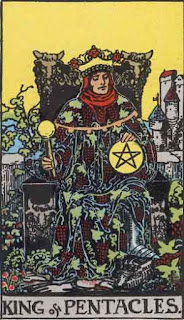


In the film, as in the book, Big/Kananga is assisted by Solitaire, a fortune teller able to predict the future and see present events at a remote distance, and if the racial politics of this film are unsettling to the modern eye, then boy howdy the sexual politics. Boy howdy. Solitaire's thing is cartomancy: she predicts the future using tarot cards, which leads to Bond inevitably drawing out "The Lovers" from her deck. Later on in the film, Bond buys seventy-eight identical tarot decks, fishes out "The Lovers" from each one and creates a stacked deck from which he asks this clairvoyant lady to pick a card. On any normal day this would be considered a dick move. At best it's frat-house level seduction game. At worst, he is exploiting either the fact that magic exists or, given his own skepticism, the beliefs of this young lady to get in her pants.

This is, to say the least, problematic. It's one thing for the films to adopt the idea that the ladies in them are pretty much always DTF, it's quite another for Bond to take his secret agent's talent for exploiting systems and apply it to this twenty-year-old girl. It's no better, really, than Kananga's exploitation of Rosie Carver's fear and superstition (which he helps along with mechanized statues and dolls and the like) to turn her against the CIA. What makes the whole business worse is that Solitaire is a virgin, and her predictive ability is tied to her virginity (for some reason) so James essentially humps the magic straight out of her.

The problem with Solitaire, and it's a problem that occurs pretty frequently within these films (particularly for ladies whose job description reads: "Bad Guy's Girlfriend"), is she's completely bereft of agency. Forget tarot, Solitaire is a chess piece. The sole saving grace of this entire plot line is that she's clearly unhappy working for Kananga and he's a dangerous dude and she fears for her life, but that doesn't make the film turning her lady area into a proxy battlefield between two dudes any more palatable. And that's before even taking in to account the film playing into centuries of imagery surrounding Virginal White Ladies and Sinister Black Men.


Ian Fleming was an accomplished racist. This isn't exactly news. The original copy of the novel Live and Let Die has a chapter title that cannot be repeated in polite company. The novel asserts also that the only reason Big became such a hot shot in the world of pirate gold and crime is down to mentorship by Soviet higher-ups. It's sort of a shame because Yaphet Kotto is such an enjoyable presence on screen. He's urbane and charming, and his youth--Kotto was thirty-four to Moore's forty-five--marks a change that feels as revitalizing to the franchise as Moore's casting does. In fact, the disparity in age between Bond and his antagonist has been flipped since Connery's own debut in Dr. No. There, Connery's Bond was just thirty-two, and the first of his antagonists, Joseph Wiseman's eponymous Evil Scientist, was forty-four.

The film, then, is an act of magic, as films are. Like Spectre forty-two years later, it takes an unease about the world and plants James Bond at the center of that unease, forcing him to navigate through it, that by his navigation do we see our own way out. But while Spectre's unease about the surveillance state is understandable and even laudable (if clumsy), it isn't possible to take the same reading of Live and Let Die, which seems to be all about assuring white people that they're still in charge. This of course ties right back to Fleming and his original conception of the character of James Bond. At the time of Bond's creation, the Sun had set on the British Empire. Its conquered territories were ceded back and it had diminished in importance next to the likes of the United States and the Soviet Union. The novels imagined James Bond and by extension the British Way of Doing Things as an integral part of that new political landscape. The Connery films are all about that narrative, of asserting Britain's continuing importance in this brave new world, reducing the Cold War belligerents to puppets of a vast criminal empire in the form of Ernst Blofeld's SPECTRE. By Live and Let Die, Connery and Blofeld are out, and the world is changing. To the extent that "keep Bond in business" is the desired outcome, then the spell worked, even if its component parts have aged badly.

If it sounds like I'm being harsh, well, I am. Live and Let Die is enjoyable for what it is, an un-self-conscious adventure film full of gadgets and gunfights, where a man walks across a bunch of alligators to escape a death trap. And while I don't believe the film makers intended for the finished product to turn out quite as racist as the one we got, it's not necessarily something I'd readily recommend to the uninitiated. The problem with this whole mess in that, in the end, it's not easy to dismiss it all as just a quaint throwback. Much of this baggage is still with us. The blaxploitation era would dwindle out around the late Seventies. There are fewer black-fronted films and absolutely fewer black-fronted television shows now in 2016 than there were when I was growing up as a teenager in the Nineties. The sort of "oh, it was a different time" dismissal doesn't quite work when serious Presidential contenders run on the back of racist and sexist rhetoric, and Hollywood professionals close ranks against the idea that hiring and casting attitudes should change.

Live and Let Die is, in the end, a very problematic film. But it has the great Roger Moore, a memorable villain, and I for one can't close the door completely on a movie with a murderous jazz funeral.

Proofreading and tarot consultation provided by my beautiful, long-suffering wife Anne.